Stark VARG SM: The 80HP Electric Supermoto Redefining Street Performance in 2026
Quick Answer
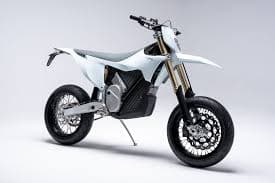
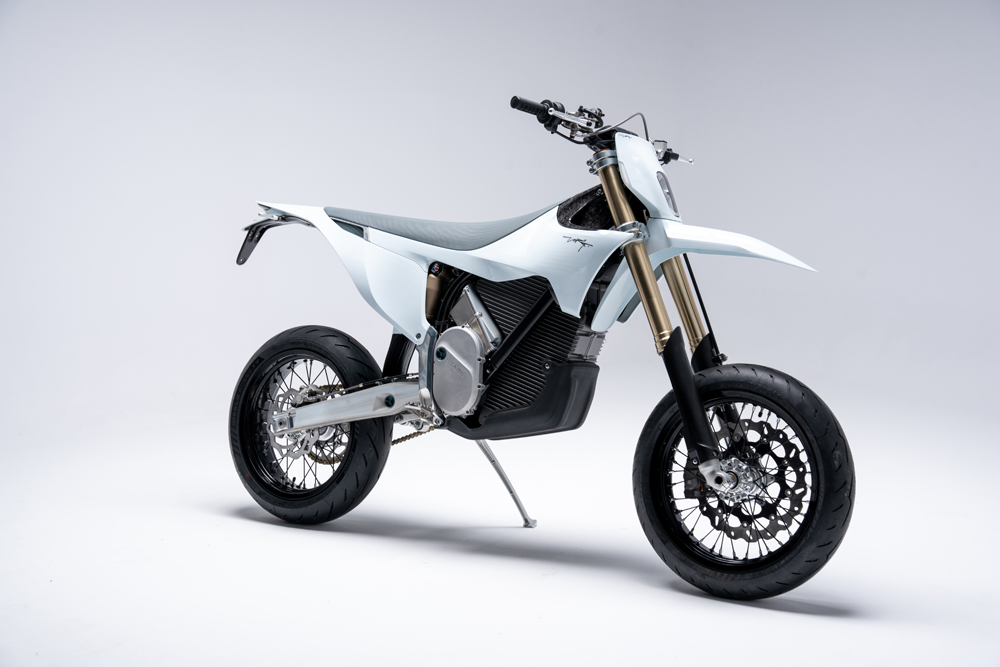
The 2026 Stark VARG SM is the most powerful production electric supermoto available today, with up to 80 hp, 914 Nm of torque, and street-legal credentials across the US, Europe, Australia, and New Zealand. Starting at $12,900 for the 60hp Standard model and $13,900 for the 80hp Alpha version, it combines a 7.2 kWh battery with aggressive supermoto-specific hardware including 17-inch wheels, KYB suspension, and Brembo brakes. Real-world range sits between 50–73 miles depending on riding style, with 1–2 hour charging times. This bike targets experienced riders coming from gas supermotos or high-performance dirt bikes who want instant electric torque, app-based power customization, and minimal maintenance—but are willing to accept limited range and the need for strategic charging infrastructure.
Table of Contents
- Why the Stark VARG SM Matters in 2026
- Core Specs: Power, Battery, and Performance
- Chassis, Suspension, and Braking Setup
- Range and Charging: The Reality Check
- The Competition: KTM, Yamaha, and What's Coming
- Who Should Buy the Stark VARG SM?
- What It's Actually Like to Ride
- Charging Infrastructure and Practical Ownership
- Safety and Gear Requirements
- Pricing and Value Analysis
- Frequently Asked Questions
Why the Stark VARG SM Matters in 2026
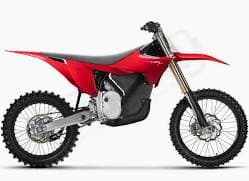
Electric supermotos have existed in prototype form and DIY conversions for years, but the 2026 Stark VARG SM marks the first time a manufacturer has delivered a purpose-built, street-legal electric supermoto with performance credentials that genuinely threaten gas-powered equivalents. Where previous electric street bikes focused on urban commuting or entry-level capability, Stark took its championship-winning MX 1.2 platform—already producing up to 80 horsepower and dominating off-road racing—and engineered it specifically for tarmac aggression.
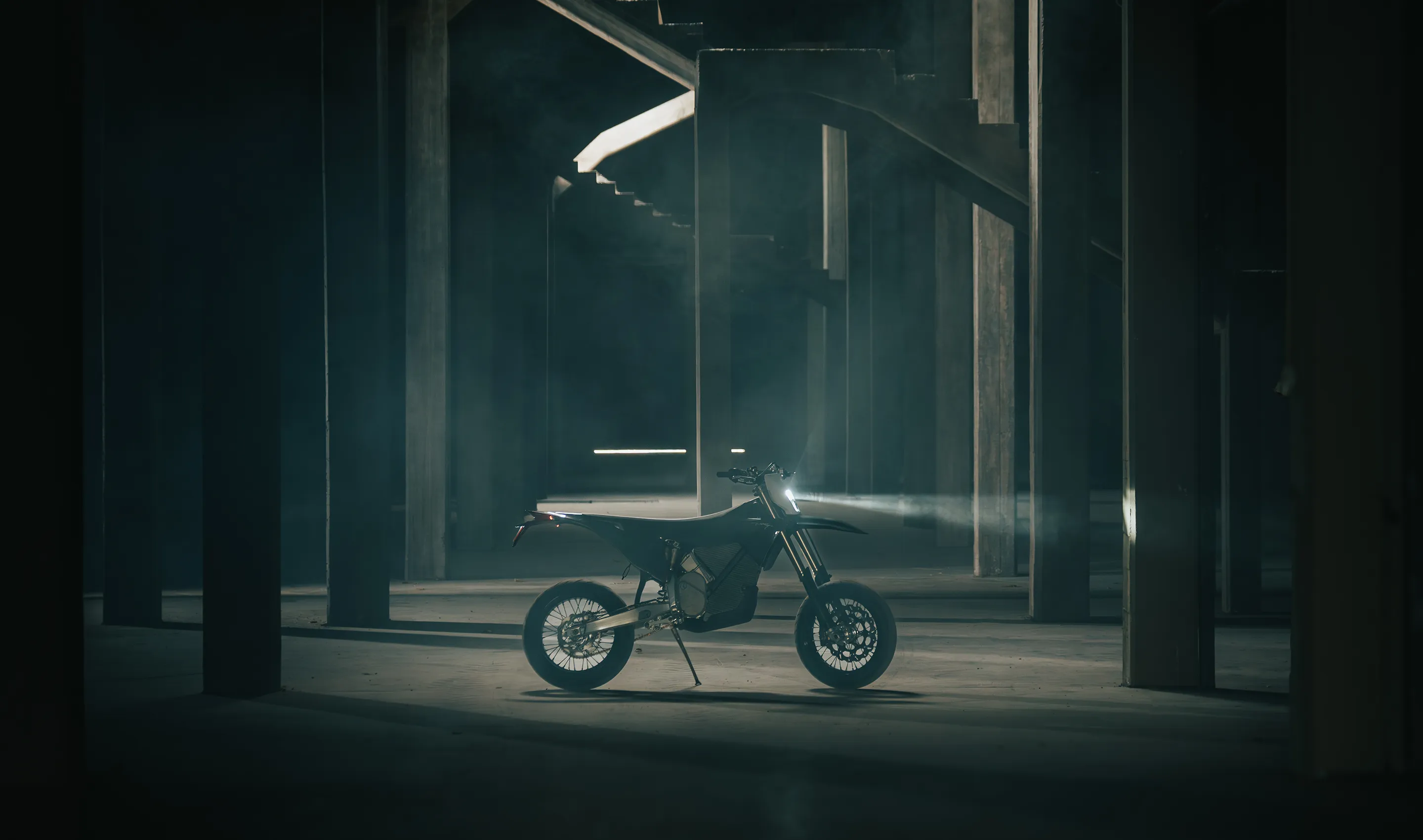
The significance extends beyond raw specifications. Stark's approach validates electric power as a legitimate performance choice for enthusiast riders, not just eco-conscious commuters. With 914 Nm (637 lb-ft) of torque at the rear wheel, instant power delivery from 0 RPM, and an Android-based Arkenstone display that allows riders to reprogram everything from throttle response to engine braking on the fly, the VARG SM delivers an experience that gas supermotos fundamentally cannot match.
Equally important is what Stark accomplished with weight distribution and handling. At 274 pounds wet, the SM weighs less than most 450cc gas supermotos despite carrying a 7.2 kWh battery pack. The honeycomb magnesium battery case serves as a stressed structural member, allowing Stark to use a high-strength steel trellis frame with a forged aluminum subframe that keeps rigidity high and mass centralized.
The Timing: Why 2026 Is the Electric Supermoto Inflection Point
The VARG SM arrives as major manufacturers finally commit resources to electric off-road and supermoto platforms. KTM's 2026 Freeride E-XC receives substantial updates focused on battery efficiency and extended ride times, while Yamaha's YE-01 Racing Concept—built with Electric Motion for the new MXEP electric motocross championship—demonstrates that blue-chip OEMs now view electric powertrains as competitive tools, not compliance projects.
For riders considering the jump from gas to electric, 2026 represents the first year where performance, infrastructure, and model availability align sufficiently to make that transition practical for spirited street and track riding.
Core Specs: Power, Battery, and Performance
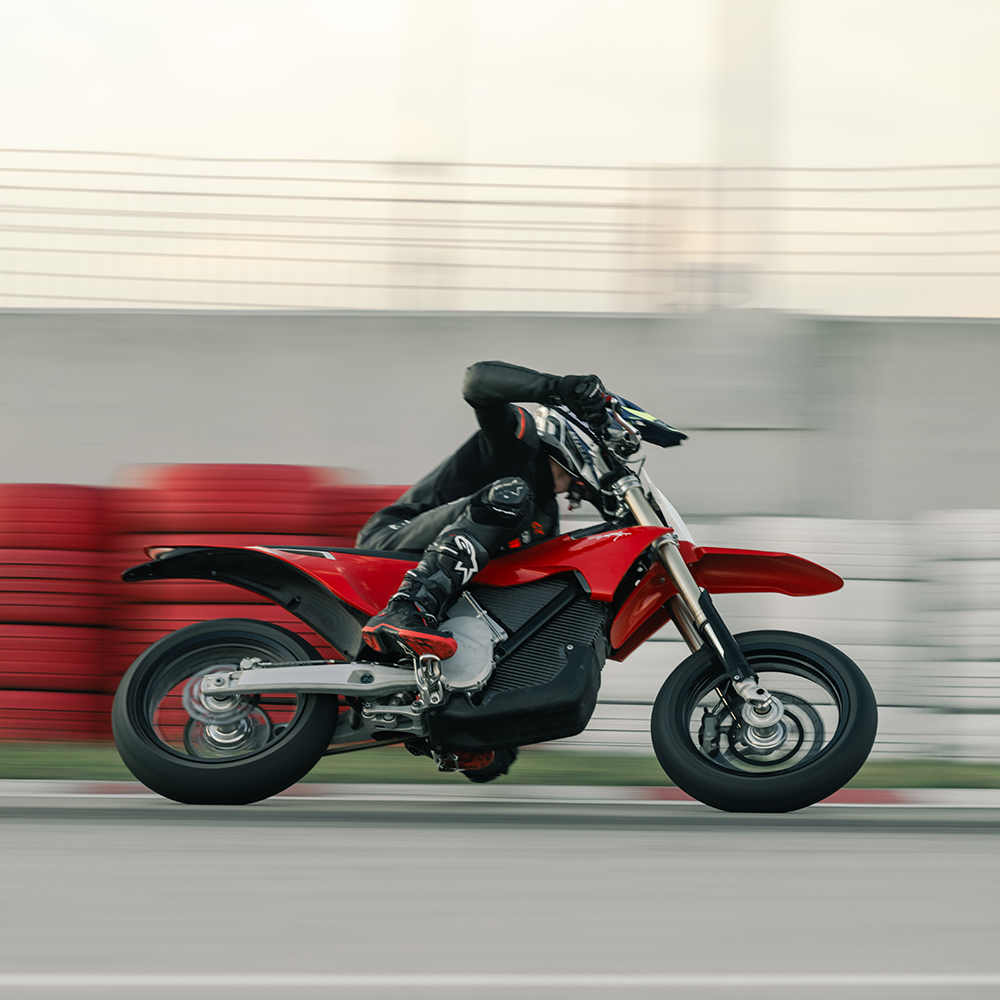
Understanding what the Stark VARG SM actually delivers requires separating marketing claims from real-world capability. Stark offers two power configurations, both using the same 360V PMAC (permanent magnet AC) motor and 7.2 kWh battery, with differences controlled entirely through software.
| Specification | Standard (60hp) | Alpha (80hp) |
|---|---|---|
| Peak Power | 60 hp | 80 hp |
| Rear Wheel Torque | 674 lb-ft (914 Nm claimed) | 914 Nm (claimed) |
| Voltage System | 360V | 360V |
| Battery Capacity | 7.2 kWh honeycomb magnesium | 7.2 kWh |
| Transmission | Single-speed direct drive | Single-speed |
| Claimed Range | 50.3 mi highway / 73 mi combined | 50.3 mi highway / 73 mi combined |
| Charging Time | 1–2 hours (240V) | 1–2 hours (240V) |
| Weight | 274.5 lbs | 274.5 lbs |
| Price | $12,900 | $13,900 |
Power Delivery: Why Electric Torque Figures Mislead
The 914 Nm torque claim requires context. Unlike gas motorcycles that multiply engine torque through a multi-speed transmission (typically 14–15x multiplication in first gear), the VARG SM's single-speed setup only multiplies motor torque by approximately 4–5x through its primary and final drive ratios. This means that while the rear-wheel torque number appears astronomical compared to a gas bike's engine spec, actual thrust at the tire during hard acceleration is more comparable to a well-tuned 450cc motocross bike than the figures suggest.
The real advantage lies in delivery. Where a gas 450 requires clutch modulation, precise throttle control, and RPM management to access peak torque, the VARG SM delivers maximum torque instantly from 0 RPM with zero lag. Riders describe this as feeling like a "cartoon rocket"—the bike launches with immediate, linear thrust that traditional engines cannot replicate.
Adjustable Power: 10–80 HP in Your Pocket
One of the VARG SM's most significant advantages over gas competition is app-based power tuning. Through the Stark app and the Arkenstone display mounted to the handlebars, riders can adjust:
- Total power output: From roughly 10 hp up to the full 60 or 80 hp depending on model
- Throttle response: Aggressive race maps to smooth beginner settings
- Engine braking (regenerative braking): 0–100% adjustable to suit surface and riding style
- Traction control: Electronic intervention levels for varying grip conditions
This allows a single bike to serve as both a mellow 20-hp urban commuter for battery conservation and traffic navigation, and a full-send 80-hp kart-track weapon when conditions permit—no mechanical changes required.
Chassis, Suspension, and Braking Setup
Converting a championship-level motocross platform into a street-legal supermoto required more than simply bolting on 17-inch wheels. Stark developed supermoto-specific geometry, suspension valving, and braking hardware to handle sustained high-speed tarmac loads and maximize front-end feedback under hard braking.
Frame and Geometry
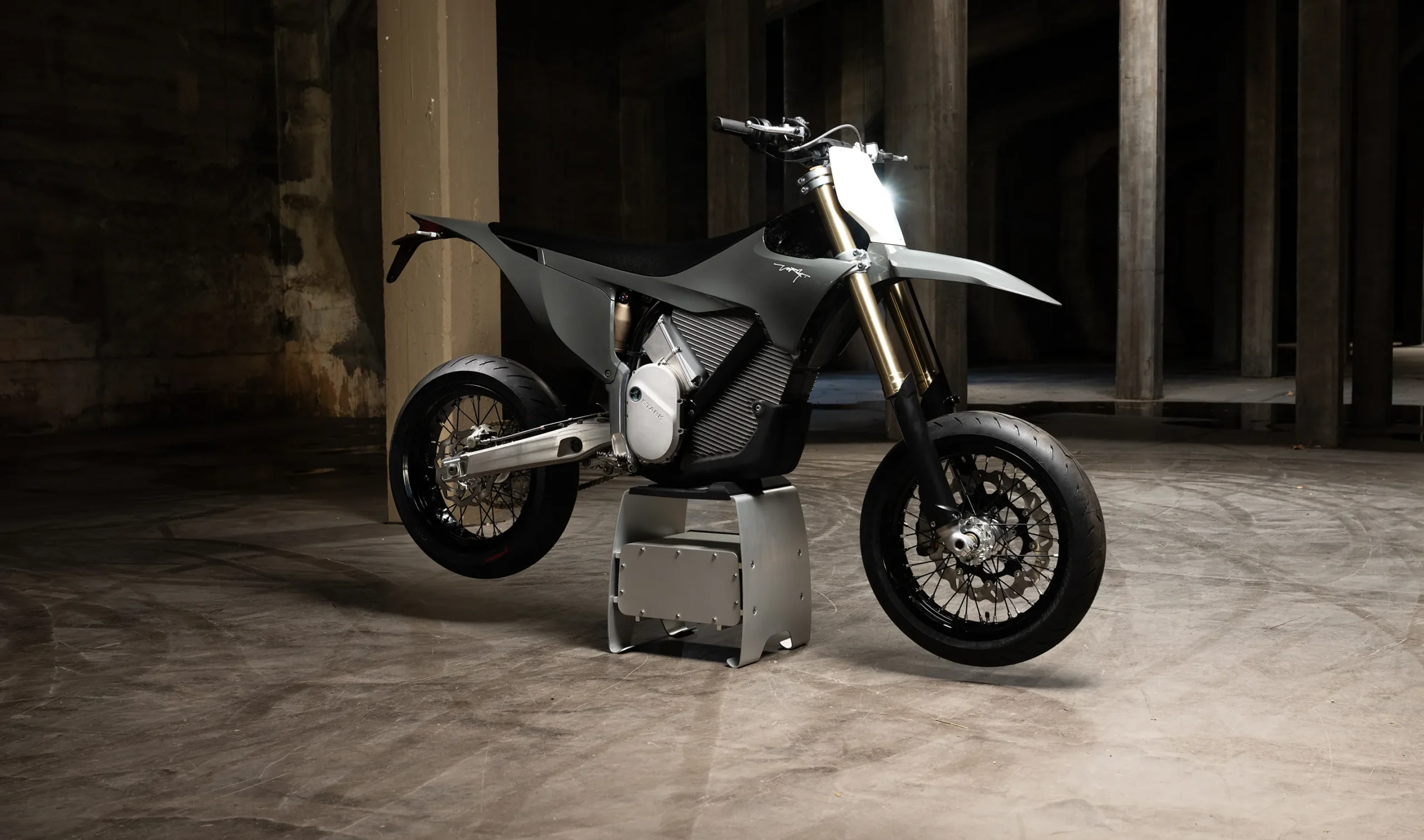
The SM retains the MX 1.2's high-strength steel main frame but pairs it with a forged aluminum subframe (rather than carbon fiber on the MX) to accommodate street-legal lighting, license plate mounting, and additional structural rigidity for sustained pavement use. The frame uses the 7.2 kWh battery as a stressed member, allowing Stark to minimize frame mass while maintaining torsional stiffness.
Geometry changes center on a model-specific triple clamp with 16mm offset and 205mm fork spacing—tighter than the MX setup—to quicken steering response and improve front-end feel on smooth pavement. This creates a more responsive turn-in character suited to tight kart tracks and urban corners, though some reviewers noted it makes the bike feel "twitchy" at highway speeds.
KYB Suspension: Supermoto-Specific Valving
The VARG SM uses fully adjustable 48mm KYB closed-cartridge forks with 290mm (11.4 inches) of travel—slightly less than the MX 1.2's 310mm to better suit the bike's lower center of gravity and reduced suspension excursion on pavement. The rear shock features KYB's triple-adjuster system with 303mm (11.9 inches) of travel, valved specifically for high-grip tarmac and big-brake weight transfer.
Early reviewers noted the suspension arrived on the stiff side, optimized for aggressive track riding rather than casual street cruising. JBI Suspension and other aftermarket tuners have developed revalve packages that improve small-bump compliance for mixed street/track use while maintaining the hold-up needed for the bike's instant torque delivery.
The suspension's biggest challenge stems from the electric powertrain's unique behavior. Unlike gas bikes that build torque gradually through RPM, the VARG's instant power delivery can upset chassis balance mid-corner or cause the front end to lift abruptly under hard acceleration. Suspension tuners focus on balancing enough damping to control chassis pitch without sacrificing the suppleness needed for traction on imperfect pavement.
Brembo Brakes: Street-Spec Stopping Power
Stark upgraded the SM's braking hardware significantly over the MX platform. The front uses a radially-mounted four-piston Brembo Stylema monoblock caliper—the same caliper found on many superbikes—biting a 320mm wave rotor, fed by a Brembo 18/21 radial master cylinder. This represents a major step up from the two-piston caliper and 260mm disc on the dirt models.
The rear brake retains a hydraulic disc setup (220mm) adequate for supermoto duty, where riders primarily use rear brake for rear-end rotation and drift control rather than heavy stopping power. Notably, the bike lacks ABS or linked braking—a deliberate choice to maintain the pure, rider-controlled feel that supermoto enthusiasts demand.
Reviewers consistently praised braking power but noted the front brake lever requires careful modulation due to minimal travel before full engagement. The system rewards smooth, progressive inputs rather than aggressive grabs—a learning curve for riders transitioning from gas bikes with more lever travel.
Range and Charging: The Reality Check
If there's one aspect where the Stark VARG SM cannot compete with gas supermotos, it's operational range. The 7.2 kWh battery delivers impressive power density but cannot match the energy storage of even a small gasoline tank, and Stark's decision to omit an onboard charger complicates away-from-home charging.
Real-World Range Data
Stark's official range claims span 50.3 miles highway to 73 miles combined urban riding. Independent testing confirms these figures hold under specific conditions but collapse quickly with aggressive riding:
- Highway cruising test: 79 km (49 miles) from 100% to 0% at sustained highway speeds in 47 minutes
- Mixed urban riding: 118 km (73.5 miles) through Barcelona streets combining low-speed urban sections with highway segments
- Track riding (aggressive): 37 minutes of competitive-pace circuit riding from 100% to 0% with professional rider Jaume Gaya
For context, comparable gas supermotos like the KTM 690 SMC R deliver 200+ miles per tank with a 3–4 gallon capacity, refillable in under five minutes at any gas station. The VARG SM's range positions it as a "loop from home" machine or a track-focused tool where charging infrastructure exists, not a long-distance touring platform.
Charging: The Onboard Charger Problem
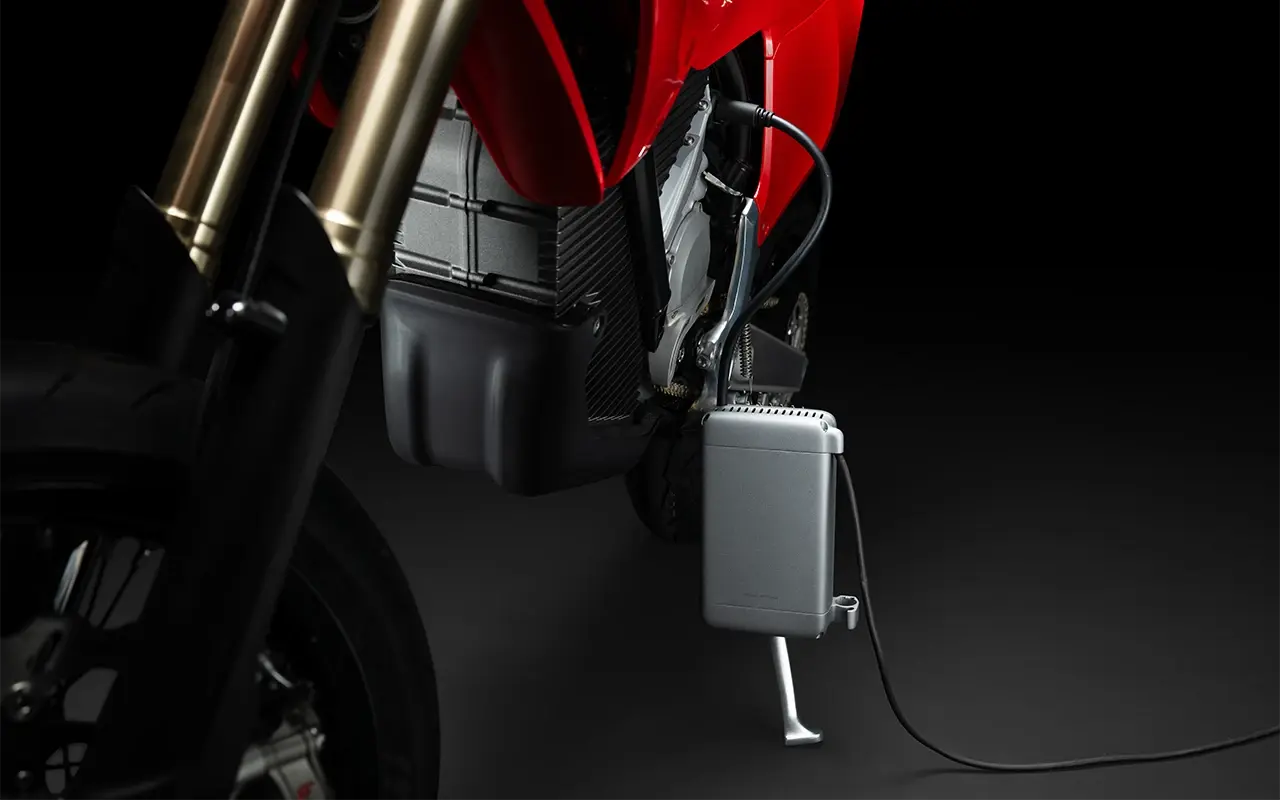
Stark's most controversial decision was excluding an onboard charger from the SM. Instead, riders must use the included "brick" charger that requires a 240V outlet (230V in Europe) capable of 16A draw. This means:
- You cannot charge at standard EV charging stations (CCS, NACS, J1772) without complex adapters
- Charging away from home requires finding compatible 240V outlets—typically unavailable in public spaces
- The charger must travel with you, adding bulk to any ride that might require mid-trip charging
Stark announced a new portable "backpack" charger for the SM but reviewers remain skeptical about its practicality and compatibility with public charging infrastructure. The reality is that VARG SM ownership requires careful route planning around your home or track charging setup—spontaneous long rides beyond the bike's range are not feasible.
Charging Times and Strategy
With the included charger and a proper 240V/16A outlet, the VARG SM charges from 0–100% in 1–2 hours. This makes mid-day charging between track sessions or during extended breaks realistic, but it's still 10–15x longer than filling a gas tank.
Smart riders approach range strategically:
- Run low power modes (20–30 hp) for urban commuting to maximize range, reserving full power for performance segments
- Use regenerative braking set to higher percentages (50–80%) on technical roads to recover energy
- Plan rides as loops from home or park near charging access for track days
- Accept that the bike is a "second bike" for most riders—a weekend weapon rather than primary transportation
The Competition: KTM, Yamaha, and What's Coming
The Stark VARG SM has minimal direct competition in the "street-legal electric supermoto" category as of 2026, but adjacent models and emerging platforms define the broader electric off-road landscape.
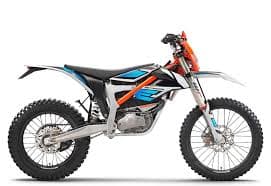
KTM Freeride E-XC (2026): The Trail-Focused Alternative
KTM's 2026 Freeride E-XC update focuses on extended ride times, improved battery efficiency, and refined WP suspension for technical trail riding. While not a factory supermoto, the Freeride represents a more approachable, trail-friendly electric platform that many riders will cross-shop:
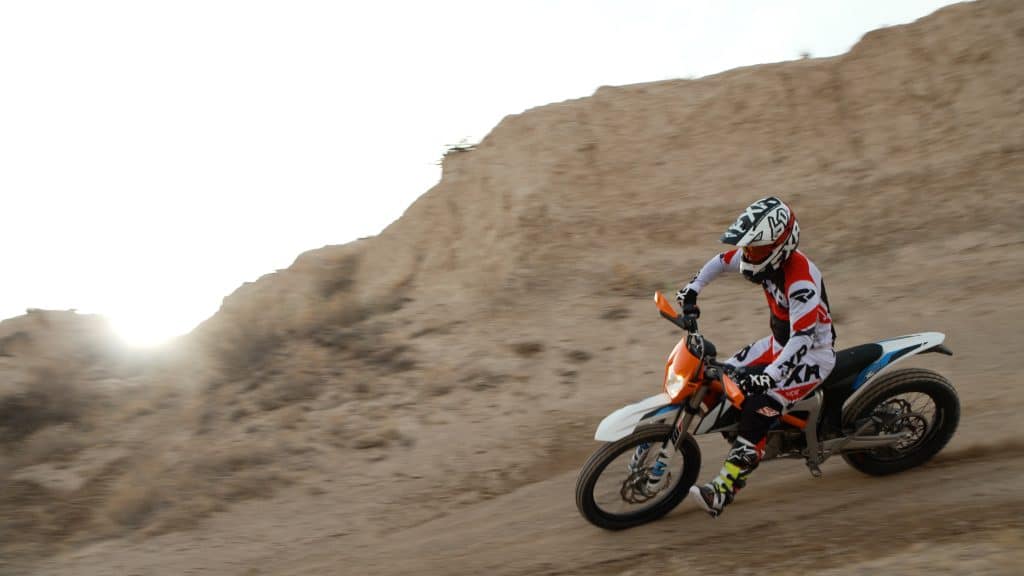
- Power: ~18 kW (24 hp) peak—significantly less than the VARG but tuned for playful, all-day trail riding
- Battery and range: Updated pack targeting ~90 minutes of aggressive trail riding or up to 2 hours at moderate pace
- Weight: Just over 110 kg (~242 lbs), making it one of the lightest electric dirt bikes available
- Suspension: Updated WP XPLOR components with 250mm front travel, optimized for rocks, roots, and technical terrain
- Street-legal potential: Off-road from the factory but convertible to supermoto via aftermarket 17-inch wheels, brakes, and lighting kits
The Freeride E-XC appeals to riders prioritizing approachable power, extended ride times, and trail capability over outright performance. It's a weekend adventure bike where the VARG SM is a performance tool.
Yamaha YE-01 Racing Concept: The OEM Performance Benchmark
Yamaha's YE-01, co-developed with Electric Motion for the MXEP electric motocross championship, signals that major manufacturers now view electric powertrains as competitive race platforms. Key aspects:
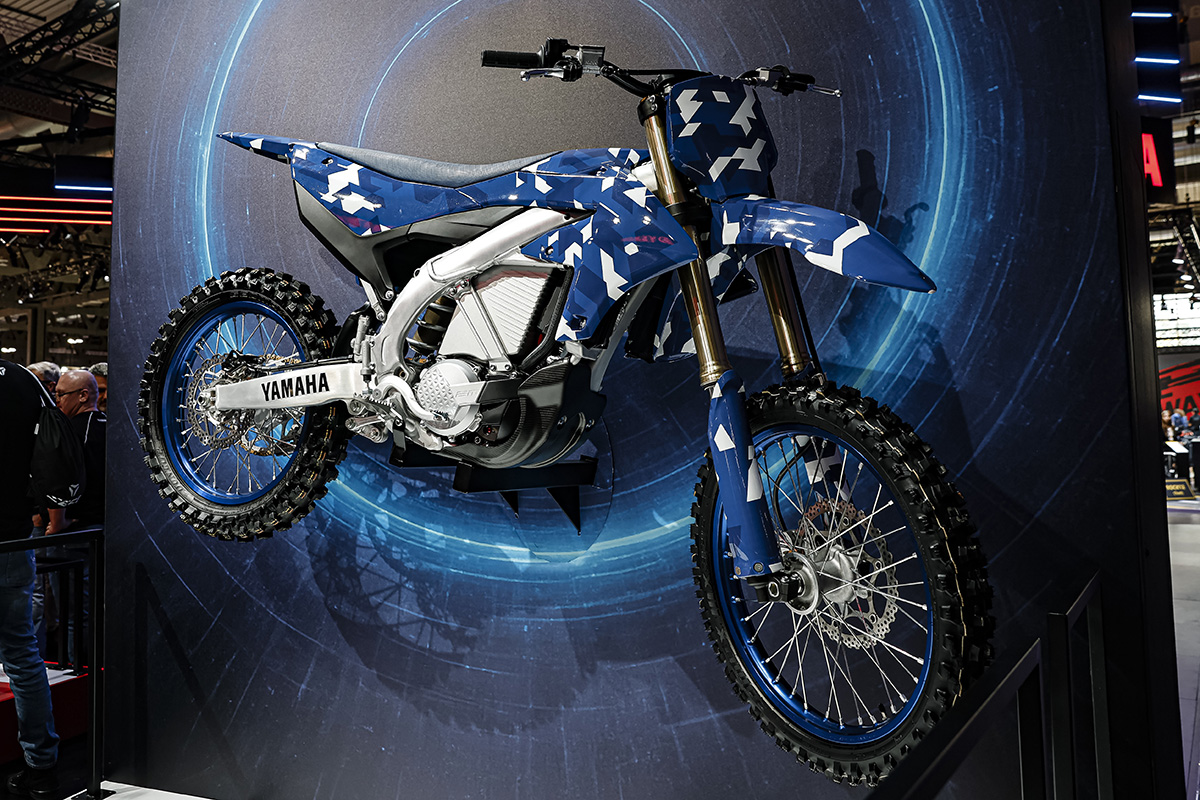
- Chassis: Based on the 2026 YZ450F motocross platform with proven geometry and KYB suspension
- Power target: Yamaha aims for performance matching or exceeding a modern 450cc MX race bike—putting it in the VARG's output ballpark
- Powertrain: Liquid-cooled electric drivetrain from Electric Motion, featuring multiple power modes, traction control, and a hydraulic clutch for feel and control
- Competition focus: Built specifically for the MXEP series; not confirmed for consumer sale but a clear R&D platform for future Yamaha electric models
While the YE-01 isn't a direct VARG SM competitor (it's MX-only and not street-legal), it demonstrates that Yamaha is developing the core technology and racing experience to launch consumer electric off-road bikes—and potentially supermotos—in the near future. For enthusiasts, the YE-01 represents validation that blue-chip OEMs now take electric performance seriously.
Comparison Table: VARG SM vs. Key Electric Alternatives
| Model | Stark VARG SM | KTM Freeride E-XC | Yamaha YE-01 (Concept) |
|---|---|---|---|
| Category | Road-legal supermoto | Electric trail bike | Race MX prototype |
| Street Legal | Yes | Off-road (convertible) | No (race only) |
| Peak Power | 60–80 hp | ~24 hp | ~450cc MX equiv. |
| Battery | 7.2 kWh | Updated pack | Race-optimized |
| Range | 50–73 mi | ~90 min aggressive | Race distance |
| Weight | 274.5 lbs | ~242 lbs | MX race weight |
| Suspension | KYB SM-specific | WP XPLOR trail | KYB race (YZ450F) |
| Ideal Use | Kart tracks, urban attack | Trail, light enduro | MX racing, R&D |
Who Should Buy the Stark VARG SM?
The VARG SM's combination of extreme performance, limited range, and premium pricing creates a narrow but enthusiastic target audience. This is not a beginner bike, a primary commuter, or a long-distance tourer—it's a specialized performance tool for riders with specific use cases and realistic expectations about electric limitations.
Perfect Fit: The Performance-Focused Supermoto Enthusiast
The VARG SM makes most sense for riders who:
- Already own gas supermotos (450 or 690 class) and want to experience instant electric torque and app-based tuning
- Have regular access to kart tracks, tight backroads, or short aggressive street loops within the bike's range
- Can charge at home or have charging infrastructure near their primary riding areas
- Value minimal maintenance (no oil changes, valve adjustments, or complex engine servicing)
- Are comfortable with the bike as a "second bike" for weekend performance riding rather than daily transportation
- Appreciate the ability to instantly adjust power delivery, throttle response, and regenerative braking via app without mechanical changes
Questionable Fit: Long-Distance Riders and Touring Use
The VARG SM struggles for riders who need:
- Daily commutes exceeding 40–50 miles round-trip without mid-day charging
- Long-distance touring capability with quick refueling
- Highway-focused riding at sustained high speeds (rapidly depletes battery)
- Spontaneous ride extensions beyond planned range
Poor Fit: Beginners and Inexperienced Riders
Despite the ability to limit power via app, the VARG SM remains inappropriate for beginners due to:
- Instant torque delivery that punishes throttle mistakes with immediate consequences
- Aggressive geometry and stiff suspension tuned for experienced riders
- No electronic rider aids (ABS, traction intervention) to help manage mistakes
- Premium pricing that makes it a poor choice for learning/crashing
What It's Actually Like to Ride
Test ride impressions reveal a bike with explosive performance and precision handling that demands respect and rewards skill. The VARG SM's character differs fundamentally from gas supermotos in ways that go beyond simple "electric vs. gas" generalizations.

Power Delivery: Instant, Linear, Relentless
Every reviewer emphasizes the instant torque hit. Unlike gas bikes that build power through RPM range, the VARG delivers maximum thrust the moment you crack the throttle. Riders describe feeling like they're "shot out of a cannon" from stops and experiencing eerily smooth, linear acceleration with no gear changes or clutch modulation—just twist and go.
At full 80hp Alpha power, the bike is "absolutely terrifying," according to multiple testers. The combination of instant torque, light weight, and no transmission to buffer inputs means throttle control becomes critical—small movements create large changes in drive force.
Handling: Sharp, Light, and Demanding
The SM's tight geometry and 274-pound weight create exceptionally quick direction changes. Reviewers noted "side-to-side transitions are so much lighter than you might anticipate" and the bike "flicks back and forth" with minimal input. This makes it ideal for tight kart tracks and urban environments but creates a "twitchy" feeling at highway speeds that requires constant attention.
The stiff suspension setup rewards aggressive riding but feels harsh during casual street use. Riders coming from plush trail bikes or street-focused models will notice significant feedback transmitted through pegs, seat, and bars on imperfect pavement.
Braking and Regeneration: A Learning Curve
The Brembo front brake delivers massive stopping power but requires smooth modulation due to minimal lever travel. Riders note you must "find that sweet spot" to avoid grabbing too hard and upsetting chassis balance.
Regenerative braking—adjustable from 0–100%—adds complexity. Set too high, it creates abrupt engine braking when rolling off throttle; too low, and you miss opportunities to extend range. Most riders find optimal settings through experimentation, using higher regen for technical roads and lower settings for smooth, flowing sections.
Sound and Vibration: Silent but Not Sterile
The near-silent electric motor eliminates traditional engine noise and vibration, creating an eerie riding experience initially. You hear tire noise, wind, and mechanical sounds (chain, suspension) normally masked by engine roar. The lack of vibration reduces rider fatigue on longer rides and improves comfort, though traditionalists miss the visceral feedback of a four-stroke motor.
Charging Infrastructure and Practical Ownership
Success with VARG SM ownership depends on establishing reliable charging workflows. Without an onboard charger or standard EV charging compatibility, riders must build charging strategy around home base and known outlets.
Home Charging: The Primary Solution
Most owners rely on home charging as their primary solution. Requirements include:
- 240V outlet capable of 16A continuous draw (standard dryer outlet works)
- Protected location for the external "brick" charger
- 1–2 hour charging window between rides
Active cooling mode can be enabled during charging to reduce battery temperature and extend longevity, particularly useful when charging between back-to-back track sessions.
Away-From-Home Charging: Limited Options
Unlike electric cars that charge at public CCS/NACS/J1772 stations, the VARG SM requires specific outlet types and adapters that severely limit public charging:
- J1772 EV stations require adapters to convert to standard outlet—success rates vary
- Tesla Superchargers and Destination Chargers are incompatible without vehicle-to-load (V2L) equipped EVs as intermediaries
- Standard 120V outlets work but extend charging to 3.5+ hours, making them impractical except overnight
The most reliable away-from-home option involves identifying businesses, shops, or tracks with accessible 240V outlets and establishing relationships with owners.
Track Day Logistics
For track use, riders must plan around the bike's ~37-minute full-power session limit:
- Bring the charger and identify track-side 240V access
- Plan for 1–2 hour charging breaks between sessions
- Consider the VARG SM as part of a multi-bike stable rather than your only track bike
- Use lower power modes for practice sessions to extend run time
Pricing and Value Analysis
At $12,900 for the Standard 60hp model and $13,900 for the Alpha 80hp version, the Stark VARG SM commands premium pricing that positions it above entry-level options but below exotic electric motorcycles. Understanding value requires comparing total cost of ownership rather than purchase price alone.
Purchase Price Comparison
| Model | Price | Power | Notes |
|---|---|---|---|
| Stark VARG SM Standard | $12,900 | 60 hp | Electric, street-legal |
| Stark VARG SM Alpha | $13,900 | 80 hp | Electric, street-legal |
| KTM 690 SMC R | ~$12,500 | ~74 hp | Gas, street-legal |
| Husqvarna 701 Supermoto | ~$12,800 | ~74 hp | Gas, street-legal |
| Zero SR/F | ~$19,000 | 110 hp | Electric street bike |
Initial cost sits in line with premium gas supermotos, making the VARG SM price-competitive on purchase—the value proposition shifts when considering ongoing costs.
Total Cost of Ownership
Electric ownership reduces or eliminates several gas bike expenses:
- Fuel: $0 per mile vs. ~$0.10–0.15/mile for gas (based on 40–50 mpg gas bikes)
- Oil changes: $0 vs. $50–100 every 1,000–3,000 miles
- Valve adjustments: $0 vs. $200–500 every 10,000–15,000 miles
- Air filters: $0 vs. $15–50 every 3,000–5,000 miles
- Spark plugs: $0 vs. $50–100 every 10,000+ miles
Remaining maintenance includes chain/sprockets, tires, brake pads, and suspension service—identical to gas bikes. Over 5 years and 15,000 miles, the VARG SM saves approximately $2,000–3,000 in maintenance and $1,500–2,000 in fuel compared to equivalent gas supermotos, partially offsetting the premium initial cost.
Insurance Considerations
Electric motorcycle insurance typically runs 10–20% higher than gas equivalents due to higher replacement costs and specialized repair requirements. Expect annual premiums of $800–1,500 depending on rider age, location, and coverage levels.
Frequently Asked Questions
How fast is the Stark VARG SM?
Top speed isn't officially published, but riders report 80+ mph capability depending on conditions, rider weight, and power mode. The bike's strength is acceleration rather than top speed—0–60 mph happens in approximately 3 seconds with instant torque from standstill.
Can you charge the VARG SM at Tesla Superchargers?
No. The VARG SM lacks DC fast-charging capability and uses a proprietary AC charger requiring standard 240V outlets. Tesla Superchargers and Destination Chargers are incompatible without using an EV with vehicle-to-load (V2L) capability as an intermediary power source.
Is the Stark VARG SM good for beginners?
No. Despite adjustable power modes, the instant torque delivery, aggressive geometry, stiff suspension, and lack of rider aids make it inappropriate for new riders. Beginners should start with lower-powered, more forgiving platforms and consider the VARG SM only after developing substantial riding experience.
How long does the battery last on the VARG SM?
Real-world range spans 49–73 miles depending on riding style and conditions. Highway riding at sustained speeds yields ~49 miles; mixed urban/highway extends to ~73 miles; aggressive track riding provides ~37 minutes of run time. Battery longevity (lifespan) should exceed 1,000 charge cycles with proper care.
What maintenance does the VARG SM require?
Routine maintenance includes chain tension/lubrication, brake pad inspection, tire pressure/wear monitoring, and suspension service. Unlike gas bikes, there are no oil changes, valve adjustments, air filters, or spark plugs to service, significantly reducing maintenance time and cost.
Can you convert a VARG MX to supermoto yourself?
Technically yes, but Stark developed SM-specific components (triple clamp geometry, suspension valving, braking hardware, and street-legal equipment) that go beyond simple wheel swaps. DIY conversions won't replicate the SM's optimized setup and may compromise street-legal compliance.
How does the VARG SM compare to the KTM 690 SMC R?
The VARG SM delivers more instant torque and faster acceleration but significantly less range (~50 mi vs. 200+ mi) and requires longer refueling/recharging (1–2 hours vs. 3 minutes). The KTM offers traditional supermoto feel with engine sound and mechanical feedback, while the VARG provides silent, vibration-free riding with app-based tuning. Choice depends on priorities: performance and tech (VARG) vs. range and tradition (KTM).
Is the $1,000 Alpha upgrade worth it for 80hp?
For experienced riders who regularly push performance limits on tracks or aggressive street riding, the extra 20 hp is valuable—but most riders will find the 60 hp Standard model already overwhelming. Consider starting with Standard and upgrading later if needed; the difference is software-only, so Stark may offer upgrade paths.
Conclusion: The Future Is Here, With Range Anxiety Included
The 2026 Stark VARG SM represents the most compelling argument yet for electric supermoto performance. With 80 horsepower, 914 Nm of rear-wheel torque, surgical handling, and street-legal credibility across major markets, Stark has delivered the bike that electric motorcycle enthusiasts have been waiting for—a machine that genuinely competes with and in some ways surpasses gas-powered supermotos in pure performance.
But it's not perfect. The ~50-mile real-world range and lack of onboard charging severely limit operational flexibility, making the VARG SM a "loop from home" machine or second bike rather than a primary transportation solution. Riders must embrace careful route planning, accept longer "refueling" times, and build their riding around charging infrastructure—compromises that gas bikes simply don't require.
For the right rider—experienced, performance-focused, with access to home charging and realistic expectations about range—the VARG SM delivers an intoxicating riding experience that feels genuinely futuristic. The instant torque, silent operation, and app-based customization create a motorcycle experience fundamentally different from and in many ways superior to traditional combustion engines.
As KTM refines the Freeride E-XC and Yamaha develops the YE-01 into production models, the electric supermoto and off-road landscape will only become more competitive. But for 2026, the Stark VARG SM stands alone as the only street-legal, high-performance electric supermoto you can actually buy—and that makes it historically significant regardless of its limitations.
Ready to explore the VARG SM and compare it against other electric and gas supermotos? Use our motorcycle comparison tool to see detailed specs side-by-side, or browse our electric motorcycle marketplace to find dealers, pricing, and inventory near you.