
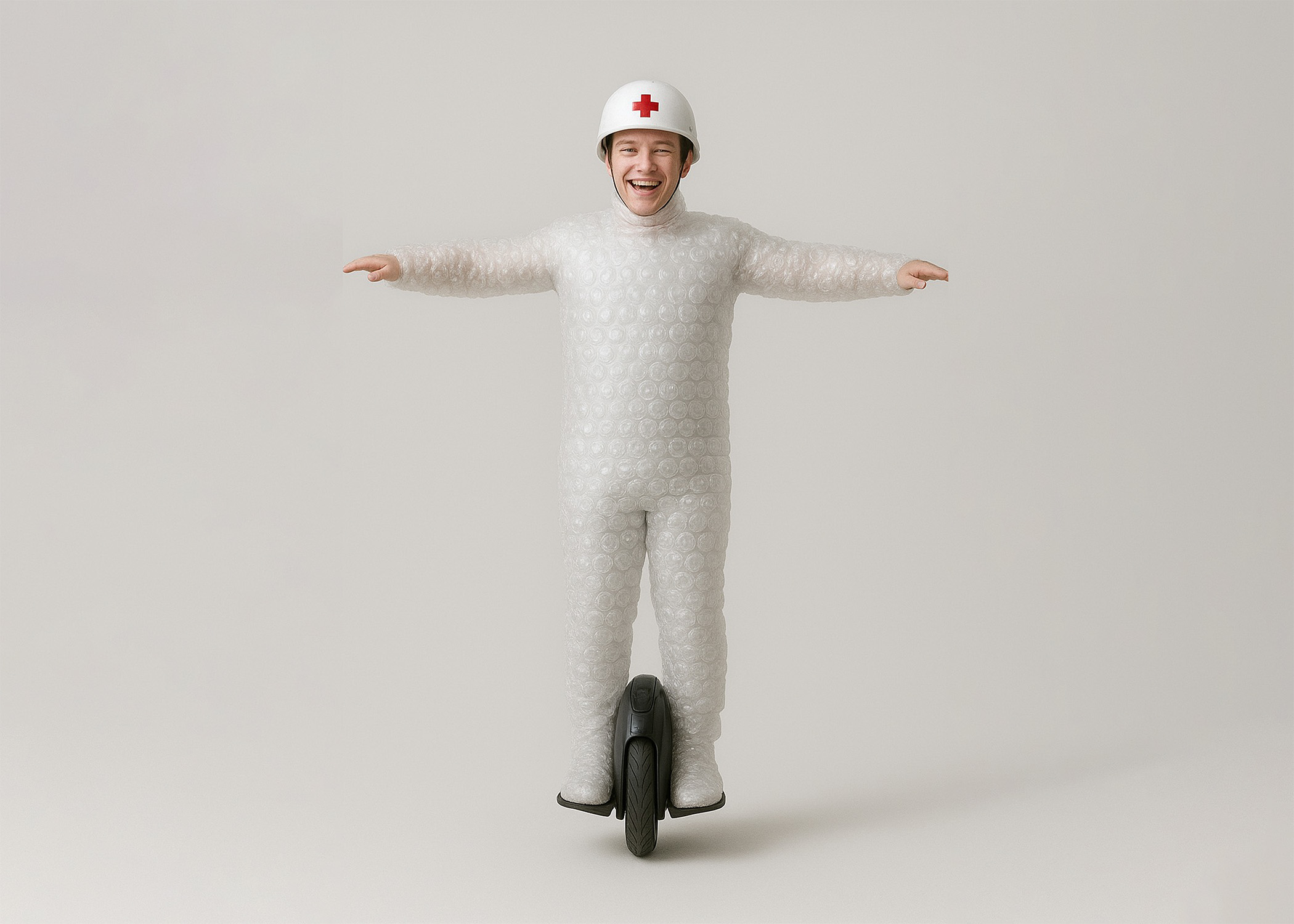
Electric Unicycle Safety Guide: Gear and Techniques
Quick Answer
Essential EUC safety gear includes a DOT/ECE certified full-face helmet, motorcycle jacket with armor, hard-shell knee and elbow pads, wrist guards, and padded shorts. Combined with proper riding techniques like gradual acceleration, maintaining a centered stance, and progressive skill development, this gear can reduce injury severity by up to 80%. Never ride without at minimum: helmet, wrist guards, and knee pads.
Table of Contents
- Why EUC Safety Matters
- Essential Safety Gear Breakdown
- Gear Requirements by Skill Level
- How to Properly Fit Safety Equipment
- Safe Riding Techniques
- Common Accidents and How to Avoid Them
- Safe Skill Progression Guide
- Night Riding Safety
- Riding in Different Weather Conditions
- Maintenance for Safety
- Legal and Insurance Considerations
- Frequently Asked Questions
Why EUC Safety Matters
Electric unicycles can reach speeds of 30-75 mph, making them one of the fastest personal electric vehicles. Unlike bicycles or scooters, EUCs require continuous balance and have no handlebars for stability, which means falls can happen suddenly and with little warning.
The Reality of EUC Accidents
Studies of PEV accidents reveal sobering statistics:
- 60% of injuries could be prevented or reduced with proper protective gear
- Head injuries account for 35% of serious EUC accidents
- Wrist and arm injuries are the most common at 45%
- Most accidents occur within the first 100 hours of riding
- Speed-related accidents increase exponentially above 25 mph
The Cost of Inadequate Protection
Beyond physical injury, inadequate safety practices can result in:
- Medical bills ranging from $5,000 to $100,000+
- Lost work time and income
- Permanent injury or disability
- Legal liability for property damage or injury to others
- Psychological trauma and fear of riding
Essential Safety Gear Breakdown
Quality safety gear is your insurance policy. Here's a comprehensive breakdown of each essential piece:
1. Helmet (Non-Negotiable)
Full-Face Motorcycle Helmet
- Certification Required: DOT, ECE, or SNELL certified
- Why Full-Face: Protects jaw, chin, and entire head
- Features to Look For:
- Multi-impact foam liner (MIPS or similar)
- Anti-fog visor or face shield
- Adequate ventilation
- Snug but comfortable fit
- Reflective elements for visibility
- Price Range: $150-$600
- Top Brands: Bell, Shoei, HJC, AGV
Alternative: High-Quality Half Shell
Only for speeds under 20 mph and short distances
- TSG Pass, Triple 8, S1 Lifer
- Must be skate-certified (ASTM F1492 or CPSC)
- Price Range: $80-$200
2. Wrist Guards (Critical)
- Why Essential: Instinctive to catch falls with hands
- Type: Hard plastic splint on both palm and back of hand
- Features:
- Rigid splints prevent hyperextension
- Padded impact zones
- Secure velcro straps
- Breathable materials
- Recommended: 187 Killer Pads, Triple 8, Pro-Tec
- Price Range: $30-$60
3. Knee Protection (Essential)
- Hard Shell Knee Pads: For speeds above 15 mph
- Features:
- Hard plastic or carbon fiber cap
- Thick foam padding underneath
- Stays in place during movement
- Allows full range of motion
- Recommended: Fox Racing, Leatt, POC
- Price Range: $50-$150
4. Elbow Pads (Highly Recommended)
- Type: Hard shell similar to knee pads
- Importance: Elbows vulnerable in forward falls
- Features: Same as knee pads - hard cap, thick padding
- Price Range: $40-$100
5. Protective Jacket/Upper Body Armor
- Options:
- Motorcycle jacket with CE-rated armor
- Mountain bike body armor
- Dedicated PEV protective vest
- Key Protection Zones:
- Shoulders
- Elbows (if not using separate pads)
- Back/spine
- Chest (optional but recommended for high-speed)
- Recommended: Alpinestars, Dainese, Leatt 3DF
- Price Range: $100-$400
6. Lower Body Protection
Padded Shorts/Hip Pads
- Why Important: Hip injuries common in side falls
- Features: EVA foam padding on hips, tailbone, thighs
- Recommended: Demon Flexforce, Hillbilly Impact Shorts
- Price Range: $50-$120
Shin Guards (Optional)
- When to Use: Off-road riding, pedal strikes
- Type: Motocross or mountain bike shin guards
- Price Range: $30-$80
7. Gloves
- Can replace wrist guards? No, wear with wrist guards
- Benefits: Better grip, minor abrasion protection
- Type: Motorcycle or mountain bike gloves
- Price Range: $20-$80
8. Visibility Gear
- Reflective Vest: For night riding or low visibility
- LED Lights: Front and rear lights on EUC and body
- Reflective Tape: On helmet and jacket
- High-Vis Colors: Bright yellow, orange, or lime green
Gear Requirements by Skill Level
Absolute Minimum (Learning Stage - Under 15 mph)
- ✅ Full-face or certified skate helmet
- ✅ Wrist guards
- ✅ Knee pads
- ✅ Closed-toe shoes
Estimated Cost: $200-$400
Beginner (0-6 months, 15-25 mph)
- ✅ Full-face motorcycle helmet
- ✅ Wrist guards
- ✅ Hard-shell knee pads
- ✅ Elbow pads
- ✅ Padded shorts
- ✅ Gloves
Estimated Cost: $400-$800
Intermediate (6-18 months, 25-35 mph)
- ✅ DOT/ECE full-face helmet
- ✅ Motorcycle jacket with armor
- ✅ Wrist guards
- ✅ Hard-shell knee pads
- ✅ Elbow pads (if not in jacket)
- ✅ Padded shorts
- ✅ Motorcycle gloves
- ✅ Reflective vest
Estimated Cost: $600-$1,200
Advanced/Expert (18+ months, 35+ mph)
- ✅ Premium full-face motorcycle helmet (SNELL/ECE)
- ✅ Full motorcycle jacket with CE Level 2 armor
- ✅ Wrist guards
- ✅ Premium knee/shin combo guards
- ✅ Back protector (if not in jacket)
- ✅ Padded shorts with hip protection
- ✅ Armored riding pants (optional)
- ✅ High-quality gloves
- ✅ Visibility gear for all conditions
Estimated Cost: $800-$2,000+
How to Properly Fit Safety Equipment
Helmet Fitting
- Size Test: Should feel snug but not painful
- Shake Test: Shake head side-to-side - helmet shouldn't move
- Two-Finger Rule: Two fingers between eyebrows and helmet edge
- Strap Test: Should fit snugly under chin with one finger width of space
- Break-In Period: New helmets may feel tight - allow 5-10 hours
Wrist Guards Fitting
- Splints should extend from palm to mid-forearm
- Straps should be tight enough to prevent shifting
- Should still allow finger movement
- No pressure points or pinching
Knee/Elbow Pads Fitting
- Hard cap should center directly over kneecap/elbow
- Secure enough not to slide during movement
- Doesn't restrict blood flow
- Test by doing squats - should stay in place
Jacket Fitting
- Armor should sit correctly over shoulders, elbows, back
- Snug fit without restricting movement
- Sleeves should extend to wrist guards
- Should not ride up when reaching forward
Safe Riding Techniques
Basic Stance and Positioning
- Feet Position: Feet parallel, slightly wider than hip-width
- Knee Bend: Slight bend in knees for shock absorption
- Weight Distribution: Centered over wheel, not leaning back
- Upper Body: Relaxed shoulders, arms hanging naturally
- Head Position: Eyes looking ahead 10-20 feet, not down
Acceleration and Deceleration
- Gradual Acceleration: Slowly lean forward, no sudden movements
- Speed Control: Use small body movements, not large leans
- Deceleration: Gradual lean back, never sudden
- Emergency Stop: Lean back firmly but controlled, prepare to step off
- Never Exceed 80% Battery Capacity: Power delivery weakens at low battery
Turning Techniques
- Wide Turns at Speed: Lean into turn, shift weight to inside foot
- Sharp Turns: Slow down first, then turn
- Look Where You Want to Go: Body follows eyes
- Weight Distribution: Inside foot slightly more pressure
- Practice in Safe Area: Master at slow speeds first
Mounting and Dismounting
- Safe Mounting: One foot on pedal, push forward, lift other foot
- Safe Dismount: Slow to walking speed, step off forward, not back
- Emergency Dismount: Step forward and run it out if possible
- Never Jump Off Backward: Leads to falls
Obstacle Navigation
- Scan Ahead: Look 10-20 feet ahead for hazards
- Slow for Obstacles: Reduce speed before, not during
- Bumps and Cracks: Slightly lift off pedals, bend knees to absorb
- Avoid Sudden Turns: Especially at high speeds
- Wet Surfaces: Reduce speed by 50%, avoid sudden movements
Common Accidents and How to Avoid Them
1. Face Plants (Most Dangerous)
Cause: Accelerating too hard, hitting cutoff, battery too low
Prevention:
- Never ride below 30% battery
- Respect tiltback warnings
- Gradual acceleration only
- Learn to recognize motor limits
If It Happens: Try to tuck shoulder and roll rather than extending arms
2. Speed Wobbles
Cause: High-speed oscillations triggered by uneven surfaces, improper stance, or tension in legs
Prevention:
- Maintain relaxed, bent knees at high speeds
- Keep weight centered and distributed evenly
- Avoid tensing up - tension makes wobbles worse
- Ensure proper tire pressure (under-inflated tires increase wobble risk)
- Build speed gradually to develop muscle memory
- Strengthen core and leg muscles
If It Happens:
- DO NOT overcorrect or tense up
- Gradually slow down by leaning back slightly
- Keep knees bent and flexible
- If severe, prepare for controlled dismount
3. Brake Wobbles
Cause: Rapid deceleration causing oscillating feedback between rider and wheel, often exacerbated by locked/stiff legs
Prevention:
- Never brake hard with straight, locked legs
- Maintain bent knees during all deceleration
- Practice progressive braking (gradual lean back)
- Avoid sudden panic stops unless absolutely necessary
- Keep your center of gravity low during braking
- Ensure adequate tire tread and proper inflation
If It Happens:
- Slightly release brake pressure momentarily
- Shift weight more forward to stabilize
- Keep knees bent and absorb oscillations
- Sit back on the wheel to stabilize
- Don't fight it - stay loose and flexible
4. Wrist/Arm Injuries
Cause: Catching fall with outstretched hands
Prevention:
- Always wear wrist guards
- Practice fall techniques
- Try to roll or slide rather than catch yourself
5. Pedal Dips
Cause: Pedals hitting ground during turns or uneven terrain
Prevention:
- Wider turns at speed
- Keep wheel perpendicular on uneven ground
- Lift inside foot slightly in sharp turns
- EUCs with higher pedals are safer
6. Loss of Balance
Cause: Unexpected obstacles, overcorrection, or poor weight distribution
Prevention:
- Stay relaxed, don't tense up
- If wobbling starts, slow down gradually
- Core strength exercises
- Practice regularly to maintain balance skills
7. Collision with Objects/People
Cause: Not scanning ahead, riding too fast for conditions
Prevention:
- Always scan 10-20 feet ahead
- Slow down in crowded areas
- Use bell or call out "passing"
- Maintain safe following distance
- Never ride on sidewalks (where prohibited)
Safe Skill Progression Guide
Stage 1: First 5 Hours (0-10 mph)
Location: Empty parking lot or wide pathway
Skills to Master:
- Mounting and dismounting
- Moving forward in straight line
- Gentle acceleration and braking
- Wide turns at slow speeds
Safety Focus: Full gear, stay under 10 mph, focus on balance
Stage 2: First 25 Hours (10-20 mph)
Location: Quiet streets, bike paths
Skills to Master:
- Tighter turns
- Riding on slight inclines
- Emergency stopping
- Riding over small bumps/cracks
- Basic traffic awareness
Safety Focus: Build confidence, practice emergency stops
Stage 3: 25-100 Hours (20-30 mph)
Location: Roads, bike lanes, varied terrain
Skills to Master:
- Riding in light traffic
- Hill climbing
- Sharper turns at speed
- Riding in different weather
- Navigating obstacles
Safety Focus: Respect tiltback, never exceed 80% speed capacity
Stage 4: 100+ Hours (30-40 mph)
Location: All environments
Skills to Master:
- High-speed control
- Advanced turning techniques
- Off-road riding (if applicable)
- Group riding
- All weather conditions
Safety Focus: Continuous learning, upgrade gear, respect limits
Stage 5: Expert (500+ Hours, 40+ mph)
Only After Mastering All Previous Stages
- Premium safety gear required
- Understand EUC limits intimately
- Expert traffic navigation
- Can handle emergencies instinctively
Night Riding Safety
Visibility Essentials
- Headlight: Minimum 1000 lumens for high speeds
- Taillight: Bright red LED, flashing mode
- Helmet Light: Additional forward lighting
- Reflective Gear: Vest, strips on helmet and limbs
- EUC Lighting: Use all available lights on wheel
Night Riding Techniques
- Reduce Speed: 30-50% slower than daytime
- Scan Further Ahead: Limited visibility means more planning
- Avoid Shadows: Obstacles hidden in shadows
- Familiar Routes: Stick to routes you know well
- Extra Caution: Drivers don't expect PEVs at night
What to Avoid at Night
- New routes or unfamiliar areas
- Off-road or unlit trails
- High-speed riding
- Areas with poor street lighting
- Riding if you're fatigued
Riding in Different Weather Conditions
Rain Riding
Can You Ride in Rain? Most modern EUCs have IP rating, but exercise extreme caution
- Speed Reduction: 50% slower minimum
- Braking Distance: Doubles or triples
- Avoid:
- Metal surfaces (manhole covers, painted lines)
- Puddles (unknown depth)
- Sharp turns
- Sudden movements
- After Riding: Dry wheel thoroughly, check for water ingress
Cold Weather
- Battery Performance: Reduced 20-40% in freezing temps
- Warm Up: Ride slowly for first 10 minutes
- Tire Pressure: Check regularly, cold air reduces pressure
- Dress Warmly: But maintain mobility in safety gear
- Storage: Store at room temperature when possible
Hot Weather
- Overheating: Watch for temperature warnings
- Battery: Don't charge immediately after hot ride
- Hydration: Bring water on longer rides
- Gear: Use breathable mesh safety gear
- Rest Breaks: Allow EUC and yourself to cool down
Wind
- Strong Crosswinds: Reduce speed, lean into wind
- Headwinds: Significantly reduce range and speed
- Gusts: Most dangerous, especially when passing buildings
- High Wind Days: Consider not riding above 20 mph winds
Maintenance for Safety
Pre-Ride Safety Check (Every Ride)
- ✅ Tire pressure correct (check manual for PSI)
- ✅ No visible damage to wheel or body
- ✅ Battery above 30% for your planned ride
- ✅ All lights functioning
- ✅ No unusual sounds when spinning wheel
- ✅ Pedals secure and not damaged
- ✅ Power pads/side panels attached
Weekly Maintenance
- Deep clean wheel and body
- Check for loose bolts (trolley handle, pedals, etc.)
- Inspect tire for embedded objects or wear
- Check charge port for debris
- Test brakes/motor cutoff
Monthly Maintenance
- Detailed tire inspection (sidewall cracks, tread depth)
- Clean and lubricate bearing surfaces if exposed
- Check pedal angle and adjust if needed
- Update firmware if available
- Full charge cycle (0-100%) for battery calibration
Red Flags - Stop Riding Immediately
- 🚨 Unusual vibrations or noises
- 🚨 Pedal wobble or looseness
- 🚨 Battery draining much faster than normal
- 🚨 Wheel doesn't self-balance properly
- 🚨 Overheating warnings
- 🚨 Strange smells (burning electronics/plastic)
- 🚨 Visible damage to shell or components
Legal and Insurance Considerations
Know Your Local Laws
- Speed Limits: Many areas limit PEVs to 15-20 mph
- Where to Ride: Sidewalk vs bike lane vs road rules vary
- Age Restrictions: Some jurisdictions have minimum age requirements
- Helmet Laws: May be legally required in your area
- Registration: Some areas require registration or permits
Insurance Considerations
- Homeowner's/Renter's Insurance: May not cover PEV accidents
- Personal Liability: You're responsible for damage/injury you cause
- Health Insurance: Ensure adequate coverage for injuries
- PEV-Specific Insurance: Some companies now offer PEV coverage
Riding Responsibly
- Yield to pedestrians always
- Follow traffic laws
- Use hand signals
- Don't ride under influence
- Be courteous to other road users
- Set good example for PEV community
Frequently Asked Questions
What's the minimum safety gear I need for an electric unicycle?
At absolute minimum: full-face or certified skate helmet, wrist guards, and knee pads. However, we strongly recommend adding elbow pads and padded shorts for better protection. The cost of safety gear is minimal compared to medical bills.
Do I really need a full-face helmet?
Yes, especially for speeds above 20 mph. Face and jaw injuries are common in EUC accidents and can be life-altering. A full-face motorcycle helmet provides significantly better protection than a half-shell skate helmet.
How long does it take to learn to ride safely?
Basic riding skills take 5-20 hours to develop. However, true safety comes with experience. Most accidents happen in the first 100 hours. Plan on 6-12 months of regular riding before attempting speeds above 25 mph.
Can I ride an electric unicycle in the rain?
Most modern EUCs have IP55 or IP56 water resistance, meaning light rain is usually okay. However, reduce speed by at least 50%, avoid puddles and metal surfaces, and never submerge your wheel. Heavy rain should be avoided entirely.
What's the safest speed to ride?
It depends on your experience level. Beginners should stay under 15 mph. Intermediate riders (6+ months) can safely ride 20-30 mph. Only expert riders with 500+ hours should attempt speeds above 40 mph. Never exceed 80% of your EUC's top speed.
How do I avoid face plants?
Face plants occur when you exceed motor power limits. Prevent them by: never riding below 30% battery, respecting tiltback warnings, avoiding sudden acceleration, staying under 80% max speed, and maintaining proper tire pressure.
Is safety gear really necessary if I'm a good rider?
Yes. Even expert riders crash. Unexpected obstacles, mechanical failures, or other road users can cause accidents regardless of skill level. Professional riders always wear full protection. Your skill doesn't matter if someone opens a car door in front of you.
What should I do if I start to lose balance?
Stay calm and don't overcorrect. If you feel wobbling, gradually slow down. If a fall is inevitable, try to roll or slide rather than catching yourself with outstretched arms. Your safety gear is designed for this.
Conclusion
Electric unicycle safety isn't just about gear - it's a mindset. The combination of proper protective equipment, sound riding techniques, regular maintenance, and respect for your limits creates a foundation for years of safe, enjoyable riding.
Remember: no ride is worth serious injury. Invest in quality safety gear, progress gradually through skill levels, and never let ego or peer pressure push you beyond your capabilities. The EUC community needs responsible riders who set good examples and advocate for safe practices.
Start with complete safety gear, practice regularly in safe environments, and build your skills progressively. Within months, riding safely will become second nature, and you'll wonder how you ever considered riding without proper protection.
Ready to gear up? Browse our complete selection of safety equipment, or learn more about choosing your first electric unicycle.